Trump's Controversial Strait of Hormuz Declaration Sparks Legal Debate
By Editor • August 16, 2026 • 3 min read
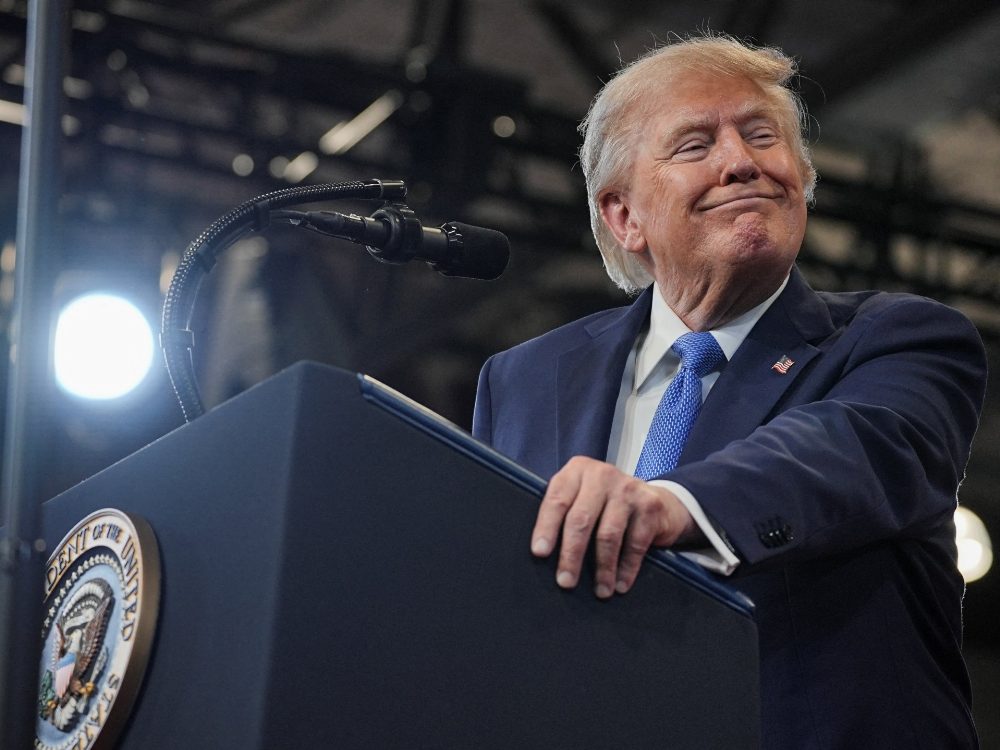
In a provocative statement, President Donald Trump has suggested he may soon declare the Strait of Hormuz as U.S. territory, igniting a contentious dialogue among legal experts and political commentators. The Strait, a vital passageway for global oil and gas, has become a focal point of military and diplomatic tensions, particularly as the United States and Iran engage in a high-stakes standoff.
During a speech at a police academy in New York, Trump claimed, "After we finish defeating Iran, which is being very badly defeated, pretty soon I’ll be declaring the Hormuz Strait a territory of the United States." His rhetoric escalated as he proclaimed, "Essentially, that’s what it is" in reference to the U.S. naval blockade, asserting that no ships could pass without U.S. approval.
Iran, however, has dismissed Trump’s assertion as “nonsense,” with officials vehemently asserting their sovereignty over the waterway. Kazem Gharibabadi, Iran’s deputy foreign minister, responded sharply, stating, "The Strait of Hormuz cannot be seized by tweet, nor by aircraft carrier, nor by issuing an order." He further insisted that the strait will always be under Iran's command.
This confrontation is set against the backdrop of an ongoing conflict that erupted on February 28, with Trump frequently using military rhetoric while simultaneously pulling back from aggressive actions. Observers note that Trump's comments often serve to rile up adversaries while maintaining a facade of control.
Legal experts are questioning the validity of Trump's claims. Bruce Fein, a former associate deputy attorney general, asserts that a presidential declaration cannot unilaterally annex territory. He articulated that such actions require a Senate ratified treaty or statute, warning that any attempt at annexation could constitute a violation of international law.
Natalie Klein, an international law specialist, posited that if the U.S. were to assert control over the Strait, it would need military dominance over Iran, a scenario that appears unlikely. She commented that Trump's claims lack plausibility under international law without a substantial military presence.
Iran has been actively engaging Oman to negotiate maritime traffic management in the strait, signaling a desire to address the ongoing crisis. Iranian Foreign Minister Abbas Araghchi indicated that discussions could soon yield results, but emphasized that any resolution regarding the waterway's reopening would depend on U.S. adherence to previous agreements.
Domestically, Trump's approach to the Iran conflict faces scrutiny, with a recent poll revealing that only 35 percent of Americans support the war efforts. Rising petrol prices, which have recently surpassed $4 a gallon, further complicate the political landscape as the midterm elections approach.
Experts suggest that Trump's remarks may be more about appealing to his political base than a reflection of actual policy. Paul Musgrave, a political analyst, remarked that while Trump’s statements should be taken seriously, they should not be interpreted literally, highlighting the theatrical nature of his communication style.
As tensions continue to simmer in the region, the legal implications of Trump’s claims regarding the Strait of Hormuz remain uncertain. The international community watches closely as the situation evolves, with the potential for significant ramifications not only for U.S.-Iran relations but also for global maritime security.
Source: www.aljazeera.com
#international law #Iran #naval blockade #Strait of Hormuz #Trump