Reimagining Space: Gary Chang's Domestic Transformer in Hong Kong
By Editor • September 2, 2026 • 2 min read
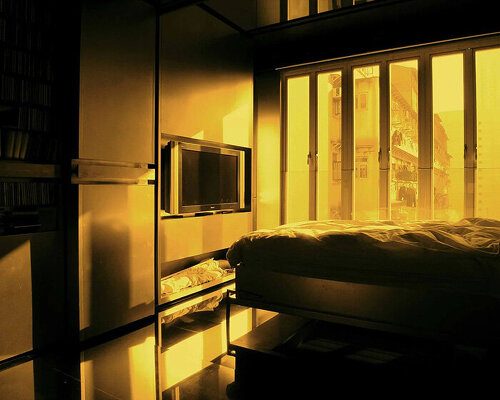
In the bustling metropolis of Hong Kong, architect Gary Chang has ingeniously transformed his modest 32 square meter apartment into a dynamic living space, showcasing a revolutionary approach to urban living. Known as the Domestic Transformer, this innovative design allows for up to 24 distinct configurations within the same footprint, challenging conventional notions of home.
Chang's journey began in 1976 when he moved into the apartment at the age of 14, sharing it with his parents and three sisters. The cramped conditions led him to ponder the necessity of fixed-room layouts, prompting him to explore how domestic functions could be realized without rigid boundaries. Over the years, he has reimagined the space multiple times, ultimately culminating in the mechanized design completed in 2007.
At the heart of the Domestic Transformer are sliding partitions and a cleverly designed overhead mechanical system that allows the space to be continually reconfigured. With the perimeter dedicated to storage and services, the central area remains flexible, adapting to various needs—from a master bedroom to a cinema or even a spa. The use of lightweight materials, such as honeycomb aluminum for counters and a hydraulic bed, facilitates these transformations, allowing for easy manipulation of the living environment.
Light plays a crucial role in the overall experience of the apartment. A motorized screen adjusts the amount of daylight, while yellow-tinted glazing enhances the warmth of the interior. This thoughtful integration of light not only alters the ambiance but also contributes to the perception of space. However, achieving acoustic privacy remains a challenge, as the movable walls compromise traditional soundproofing methods. To address this, Chang has designed the wet areas to offer some level of sound isolation.
Chang's vision is reminiscent of a broader architectural dialogue that questions the permanence of room definitions, drawing inspiration from historical precedents like Gerrit Rietveld's Schröder House and the adaptable stalls of Hong Kong's street hawkers. This lineage emphasizes the potential for flexible living arrangements that can adapt to varying needs, suggesting that a smaller space can indeed cater to diverse activities.
Through the Domestic Transformer, Chang not only showcases how limited square footage can accommodate a multitude of functions but also invites reflection on how we perceive and utilize space. The design requires active participation from its resident, who must engage with the mechanical elements to fully appreciate the flexibility on offer. In a city where space is at a premium, Chang's work offers a compelling alternative perspective on domestic living, emphasizing adaptability over sheer size.
Source: www.designboom.com
#architecture #Domestic Transformer #Gary Chang #Hong Kong #innovative design