Inside the Taliban's Afghanistan: A Struggle for Women's Rights and Governance
By Editor • August 24, 2026 • 3 min read
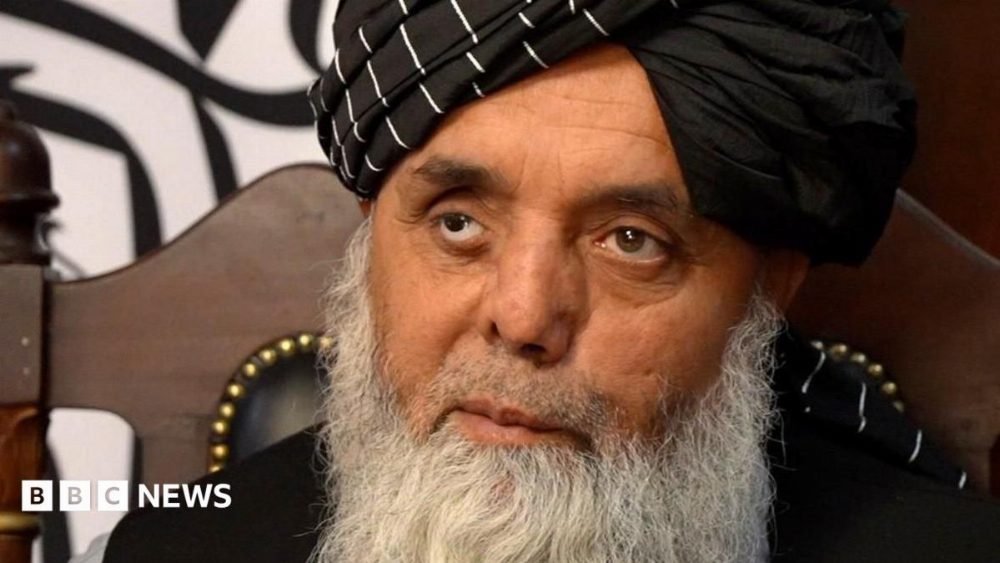
In an alarming encounter that encapsulates the challenges facing women under Taliban rule, a young woman named Tuba, veiled and resolute, approached Governor Abdullah Sarhadi in Jawzjan province to seek a divorce from her abusive husband. The stark reality of her plight unfolded as Sarhadi, a former Taliban commander who spent years in Guantanamo Bay, attempted to dissuade her from her decision, reflecting the pervasive attitudes towards women's rights in Afghanistan.
"If there was any chance to live together, I wouldn’t be here… I have taken my decision," Tuba asserted, challenging the governor's attempts to persuade her otherwise. Despite the grim backdrop of her situation, she spoke with a confidence that starkly contrasts with the Taliban's oppressive policies towards women, who have faced exclusion from education and employment since the group's resurgence in 2021.
In a revealing moment, Sarhadi remarked that women's intellect is "deficient," igniting laughter among the male officials surrounding him. This incident underscores the deeply entrenched misogyny that continues to shape governance in Afghanistan, five years after the Taliban reclaimed power. While the group professes to have evolved, its treatment of women and adherence to a strict interpretation of Sharia law suggests otherwise.
The discussion around Tuba’s divorce highlighted the hurdles women face in the Taliban’s judicial system, where they struggle to gain autonomy without their husband's consent. Sarhadi suggested that Tuba should consider the social repercussions of her decision, asking, "Who would marry me after I get my divorce?" In response, Tuba firmly stated, "My honour and dignity have already been ruined." Her family now plans to pursue legal action, although such cases are fraught with difficulties under the Taliban's court system.
Abdullah Sarhadi’s journey from a military commander during the Taliban's original regime in the 1990s to his current role as a provincial governor exemplifies the continuity of the group's hardline policies. Despite technological advancements, he reflected on the challenges posed by a recent ban on smartphones for officials, lamenting the slow pace of communication. Yet, his views on women and governance remain largely unchanged, as he openly admitted to having destroyed cultural heritage in Bamiyan, stating, "Whatever we did is in accordance with the guidance and God’s law."
Among other Taliban officials, Habibullah Badr stood out, revealing his past as an orchestrator of suicide attacks in Kabul. Now serving in a governmental role, he remains evasive about the violent history he shares with the Taliban. His reluctance to address the consequences of past actions, particularly civilian casualties, illustrates the complex relationship between the Taliban's past and present.
At a public gathering, Badr received an accolade for his service but was confronted by Sultan Mohammad Talaee, who urged for the reopening of girls' schools. The awkward silence that followed highlighted the tension between the Taliban's hardline policies and the aspirations of Afghan citizens who yearn for educational freedom. Talaee expressed hope for change, stating, "seeking knowledge is an obligation for both men and women in Islam," a sentiment that appears to conflict with the current regime’s stance.
As the BBC navigated the complex landscape of Taliban governance, it faced challenges of its own. Journalists reported increased scrutiny and intimidation from the Taliban's intelligence services, underscoring a climate of fear that stifles free expression. Zabihullah Mujahid, the Taliban’s spokesperson, reiterated that women’s rights and freedom of speech are subject to interpretation through the lens of Sharia law, signaling a continued disregard for universal human rights.
This window into the Taliban-controlled Afghanistan reveals a nation grappling with the consequences of extremist governance, where the rights of women are systematically denied, and the echoes of past violence linger in the shadows of the present.
Source: www.bbc.co.uk